In that space where you somehow disconnect and reconnect all at once, sometimes a message finds you before you even know what it means.
One found me after I finished a wonderfully profound breathwork practice.
Sometimes after an experience like that, you get these little “downloads”—random words, thoughts or messages that seem to pop into your head out of nowhere.
They come in different ways, but this time, four words came through loud and clear:
The Art of Letting Go.
Is that a book title? If it’s not, it should be.
Maybe there’s a much bigger picture being drawn for me here—but for now, the meaning of those words was tied to that moment.
And it was the message I needed to hear.
Maybe you need to hear it too.
Maybe, like me, you need to be reminded that there is art and beauty in this thing called life—the experience, the journey, the release, the acceptance.
Even when it’s so damn hard sometimes.
It's this beautiful tapestry of interwoven channels that intersect: life, dreams, hopes, fears, shadow, light, love, hate.
All of them beautiful in their own way. Each one a form of creation and art that comes from the depths of who we came here to be and who we get to become.
Some we hold on to, some we need to let go of.
But before we can let go, I think we have to be able to hear ourselves again.
The world doesn’t need a better version of ourselves.
It needs the real one.
Meeting Yourself
And for many of us, that might mean meeting ourselves for the first time in a very long time.
Not the version of ourselves that knows how to get everything done. Or the one who knows what everyone else needs.
Not who we thought we would be by now, who the world told us we should be, or even who we've worked really hard to become.
Just...ourselves.
And when we finally get quiet enough to hear her, I think something else starts to happen.
We begin to recognize what no longer fits.
The expectations. The roles. The beliefs. The ways we've learned to move through the world. The things we've been carrying simply because we've carried them for so long.
And then comes the art.
We have to let go.
Let go of who we've been and everything that ties us to that identity.
Of who we thought we'd be.
Of who everyone else needs us to be.
Of who the world made us think we should be.
And we have to be willing to see ourselves for...ourselves.
In this process, we also begin releasing some of the force that has guided our actions for so long. The pushing. The striving. The belief that if we just work a little harder, we can become who we're supposed to be.
And in its place, we create room for something softer. For listening. Allowing. Trusting.
For accepting that who we came here to be for the world is already enough.
The world doesn’t need a better version of ourselves.
Or a more healed version.
Or a more regulated, optimized, self-aware version.
It needs the real one. (The beautiful irony here is that the more we become who we actually are, the more healed, regulated and self-aware we tend to become along the way.)
And that doesn't happen overnight.
It doesn't happen after one meditation or breathwork session or program. It doesn't happen because you finally understand your nervous system or because you've collected enough tools to support it.
It happens slowly. Through patience, repetition and a dedication to continuing to meet yourself along the way.
If the voice is the carrier of the conscious...then could the body be the carrier of the unconscious?
When Does Our Soul Speak?
Because that's how we're designed.
Our systems don't particularly like being jolted from one way of existing into another. Even when we consciously know something needs to change, there may be parts of us that have spent years—or decades—believing the old way was what kept us safe.
So we don't rip it away.
We create the foundation that allows us to loosen our grip.
We build awareness. We learn to notice what's happening inside of us. We learn how to support ourselves through discomfort instead of immediately trying to escape it. We rest. We feel. We reconnect. We begin to understand what brings us back to ourselves.
And slowly, our capacity expands.
Change at the rate of safety. Integration at the pace we actually have the capacity for.
Because when we move slowly enough for our system to actually take in what's happening around us, we give it a chance to orient instead of constantly bracing for whatever comes next.
At a primal level, that matters.
A nervous system that doesn't believe it has to constantly protect itself has more room for expression. For movement. For emotion. For voice.
And I keep coming back to what that might tell us.
I heard someone suggest recently that the voice is the carrier of the conscious, and a question immediately came to me:
If the voice is the carrier of the conscious...then could the body be the carrier of the unconscious?
What lives inside of us before we have words for it?
What does the body hold, communicate or express before our conscious mind understands enough to tell us what's there?
And what becomes possible when the body begins to feel safe enough to stop bracing?
And it begins to feel safe enough to express. To create. To trust.
To just...be.
And when that becomes possible, does it make space for an even deeper connection?
Do we get the chance to hear our soul?
Because there is beauty in all of it.
Even the letting go.
Building the foundation to live.
I've been thinking about the relationship between those two things—the nervous system and the soul—because I don't believe we do all of this work just to end with a perfectly regulated nervous system.
That's great. But I think it becomes something much bigger than that.
As the nervous system builds capacity, the soul gives us somewhere to go with it.
When there is enough safety within us, we have more space to listen—to the downloads, the whispers, the truths that find us in profound moments and quiet ones. The things that drop in before we can fully explain them, asking us to listen before we necessarily understand.
Like the one that found me after that breathwork practice and eventually became the words you're reading now.
And from that place, we have more room to discern what is aligned and what isn't, allowing us to move through life with a little more guidance and a little less force.
That's why the foundation matters.
Not because we're supposed to spend our lives working on ourselves.
Not because we need to heal every wound, regulate every response, understand every pattern or become some perfectly evolved version of ourselves before we're ready to live.
It's actually quite the opposite.
We build the foundation so we can start to live.
Our world is asking a lot of us right now. And most of it is not easy.
It feels really hard. Unfair. Disorienting.
We cannot control all of that. But we can learn to pause and tend to ourselves so that we can hear ourselves through it.
Because while change is inevitable, conscious participation is optional.
Life will pull us away. It will make sure of that.
We don't get to choose everything that happens to us along the way.
But we can choose whether we consciously participate in finding our way back.
We can listen and question what we've been carrying. We can recognize when something that once protected us no longer needs to.
We can allow ourselves to outgrow identities, expectations and versions of our lives that once made perfect sense. We can decide what still belongs—and what we're ready to release.
And we can trust that letting go doesn't mean we're losing ourselves.
Sometimes, letting go is how we finally get close enough to meet ourselves.
And maybe that's what I was beginning to understand lying on the floor.
The art wasn't just in the release.
It was in everything that had brought me there. What I had carried. What had protected me. What I had become. What I was ready to release. And whatever was waiting to be created from the space left behind.
Maybe that's the real art of letting go.
We don't have to force ourselves to release everything we've been so we can race toward some better version waiting on the other side.
We create enough safety within ourselves that we don't have to hold on quite so tightly anymore. We loosen our grip, little by little, and allow what is true to come forward.
And then we listen to where it wants to take us.
That’s when we know it's going to be okay.
Because there is beauty in all of it. Even the letting go.
All my love and soul,
Courtney
About the author
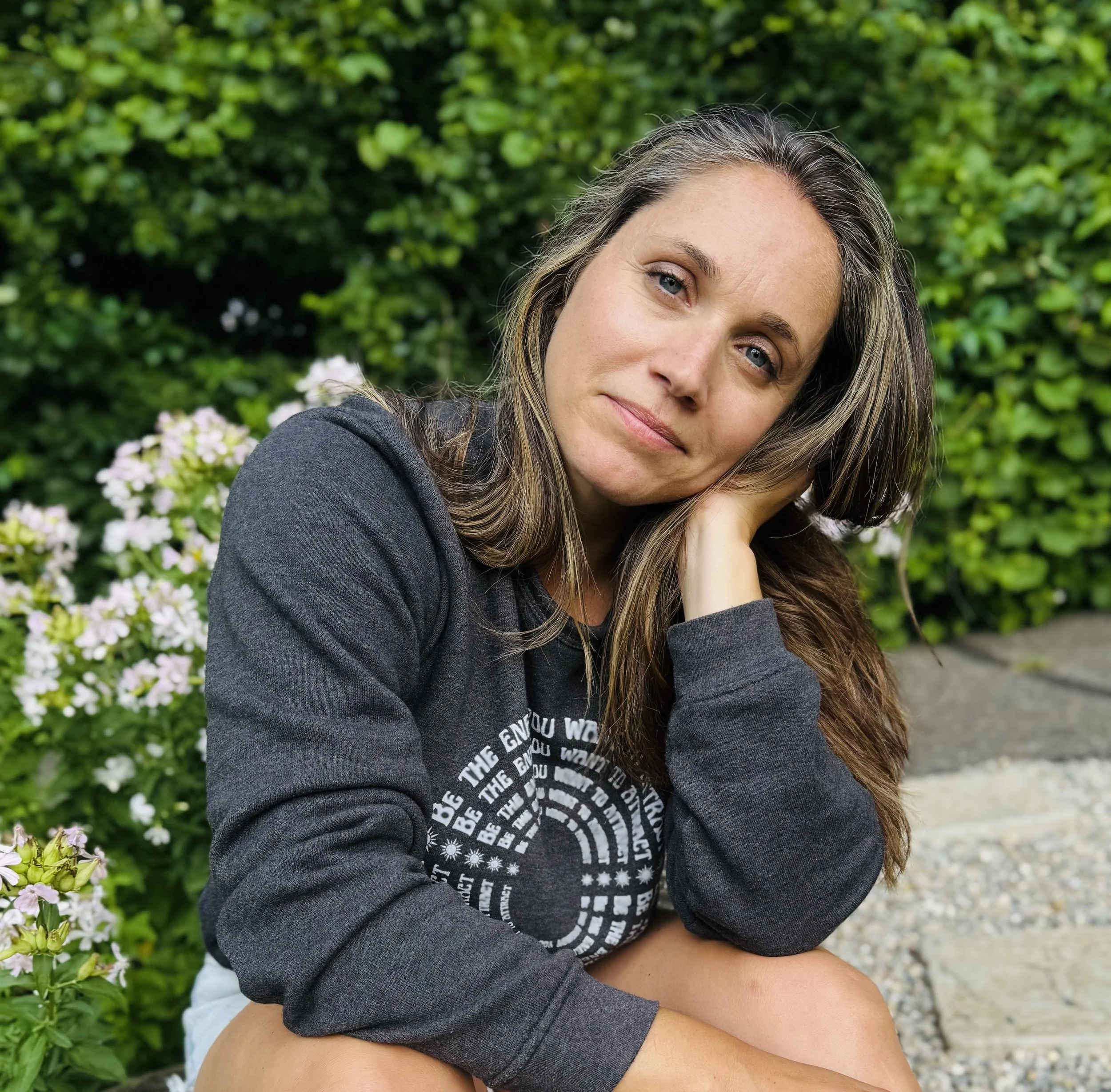
Hey there
I’m Courtney
I run Journey Through Bliss, a community I was inspired to create for high-capacity women who are ready to do things differently.
After walking through motherhood, profound personal loss and the unraveling of everything I thought I knew, I discovered that healing doesn’t happen through hustle or push—it happens in the pauses. That sacred, often uncomfortable space where we meet ourselves again.
I created this work because I needed it too. Not another thing to add to the list—but a way of being that integrates into real life.
In JTB, we focus on disrupting lifelong patterns by understanding and re-calibrating the nervous system, and on finding a clear, sustainable path through inner work and healing modalities that actually serve you in everyday life.
At the heart of my work is a simple but radical belief: we were all born with magic. We just forgot. And remembering is always worth it.
I’m here to help women do just that—individually, and together.
You may also like